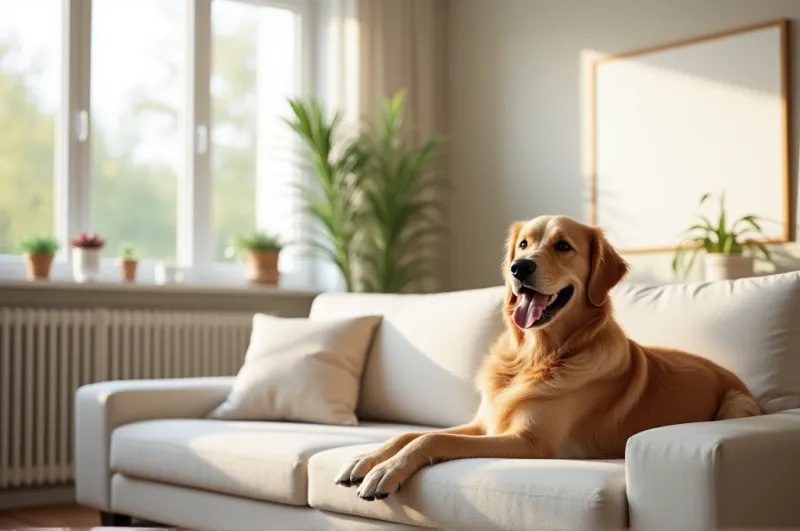
We clean a lot of homes with dogs and cats in Orange County, and there is a pattern worth sharing: the homes that smell and look fresh are not the ones with the best vacuum. They are the ones where a few small things happen consistently.
Here is what actually works, based on what we see week after week.
Hair Is a Timing Problem, Not a Vacuum Problem
People buy stronger vacuums when the real issue is frequency. Pet hair binds to fabric and carpet fibres over time — the longer it sits, the more grip it gets. Hair vacuumed on day one lifts easily; the same hair after a week has worked its way into the pile.
Two shorter passes a week beat one thorough session. And if you brush your pet outside twice a week, you remove the hair before it ever lands in the house. That single habit does more than any equipment upgrade.
For hair already woven into upholstery, a rubber glove dragged across the fabric pulls it up in clumps — it works better than most specialty tools.
Odour Lives in Soft Things, Not in the Air
Air fresheners cover smell for an hour. The source is almost always textiles: the dog bed, the rug by the door, the blanket on the sofa, the curtain edge at nose height.
Wash the pet bed every two weeks, not every two months. Most covers are machine washable and it is the highest-value thing you can do for how a home smells. Rotate two covers so the bed is never out of use.
When we walk into a house that smells like pets despite being visibly clean, the bed is the culprit roughly nine times out of ten.
Handle Accidents in the First Ten Minutes
What you do immediately matters more than what you use.
Blot, do not rub — rubbing drives liquid deeper into the carpet backing, where it stays and keeps smelling long after the surface is dry. Press with a dry towel, stand on it, repeat until the towel comes up dry.
Then use an enzyme cleaner rather than a general-purpose one. Enzymes break down the proteins that cause lingering odour; ordinary cleaners mask them, which is why a spot can smell fine to you and still draw the pet back to the same place.
Skip anything ammonia-based. Ammonia reads as a scent marker to dogs and cats and encourages repeat accidents in the same spot.
The Entry Point Does Most of the Work
Orange County is dry and dusty for much of the year, and dogs bring a remarkable amount of it inside on their paws.
A washable mat inside the door and a towel kept by it changes the whole picture. Wiping paws takes fifteen seconds and stops dirt from being distributed across every room. It is unglamorous and it is the single highest-return habit on this list.
Products Around Animals
Pets spend their lives at floor level, walk through whatever is on it, and then lick their paws. Residue matters more for them than for us.
We use eco-friendly, non-toxic products in every home for exactly this reason. Two things genuinely worth avoiding around pets are concentrated pine oil and anything phenol-based — both are toxic to cats in particular.
Whatever you use, let floors dry fully before letting animals back on them.
Where Hair Actually Accumulates
Not the middle of the room. Hair travels on air currents and collects at edges: along baseboards, under furniture, around table legs, at the bottom of stairs, and in the vent covers.
Air vents are the most overlooked spot in a pet home. They collect hair and then push it back into the room every time the system runs. Vacuum the covers once a month.
Being Realistic About It
A home with animals will never be a home without animals, and that is fine. The goal is not sterile — it is a house that feels fresh when someone walks in, with no smell you have stopped noticing because you live there.
Everything above is maintenance. What it does not solve is the accumulation deeper in carpets and upholstery over months, which is where a periodic deep clean earns its place.
We have been cleaning pet-friendly homes across Orange County since 2006 — same team every visit, so they learn your home and your animals. Licensed, insured, and using products safe around pets. Book online or call 657-557-0093.